Why Stump Grinding in Gold Coast Is the Smartest Decision After Any Tree Removal

Tree removal feels like a completion. The tree is gone, the immediate problem is resolved, and the stump sitting at ground level looks manageable enough to deal with later. Later rarely arrives on schedule, and in the meantime the stump is doing things that are not visible from the surface. The Gold Coast environment is particularly unforgiving in this regard – the subtropical climate that makes gardens here grow vigorously applies the same energy to everything a decaying stump attracts and supports. Stump grinding in Gold Coast properties is not a cosmetic finishing step. It is the intervention that stops a solved problem from quietly generating a new one.
Decomposition Is Slower Than Expected
The assumption that a stump will break down naturally within a reasonable timeframe significantly underestimates how slowly hardwood species decompose in conditions that are warm but not consistently wet enough to accelerate fungal breakdown at any useful pace. Eucalypts, camphor laurels, and the various fig species common across Gold Coast gardens are dense-wooded trees whose stumps resist decomposition for far longer than softer species. During that extended period, the stump is not simply sitting inert – it is actively hosting the organisms and insects that find partially decayed hardwood an ideal environment. The transition from garden inconvenience to structural pest risk happens gradually enough that most homeowners do not notice it until something more serious prompts an inspection.
Root Systems Have Unfinished Business
Removing a tree does not end the biological activity of its root system, and this is the detail that catches most homeowners off guard. Many species common to the Gold Coast – particularly camphor laurels and various ficus varieties – regenerate aggressively from root systems after the trunk is removed, producing shoots from the stump base and from root sections extending well beyond the original tree footprint. These regrowth shoots are not weak – left unmanaged they develop into substantial growth requiring repeated intervention rather than a single resolved removal. Simultaneously, the existing root system continues exerting physical pressure on whatever it contacts underground – drainage lines, footings, paving substrates. Stump grinding in Gold Coast properties removes the energy source driving this activity. Without the stump, root regeneration stops and existing roots begin passive decomposition rather than continued active growth.
Termites Follow a Predictable Path
The Gold Coast termite population does not need encouragement, but a decaying stump provides it anyway. What makes this specific risk worth understanding is the pathway it creates. Termites do not typically jump directly from a stump to a building – they establish and expand their colony in the stump first, building population density before foraging activity extends outward toward adjacent timber structures. A stump near fencing, decking, or the main structure is not just a termite habitat – it is a termite incubator positioned within foraging range of everything nearby. Stump grinding removes that incubator before the colony reaches the expansion stage. Chemical barriers around a retained stump manage rather than eliminate this risk, and they require ongoing maintenance around a stump that will eventually need removal regardless.
The Space Problem Is Larger Than It Looks
A stump does not just occupy the ground it visibly covers. It dictates the maintenance and landscaping decisions of a significantly larger surrounding area. Mowing lines get redirected around it permanently. Turf establishment fails across the disturbed root collar area in ways that create ongoing patchy ground cover. Any construction, paving, or significant planting within the root zone requires working around a fixed obstacle rather than starting with a clean site. The compounding effect of these constraints across the life of a garden is considerably more significant than the stump’s physical footprint suggests when it is first left in place.
Access Planning Prevents Collateral Damage
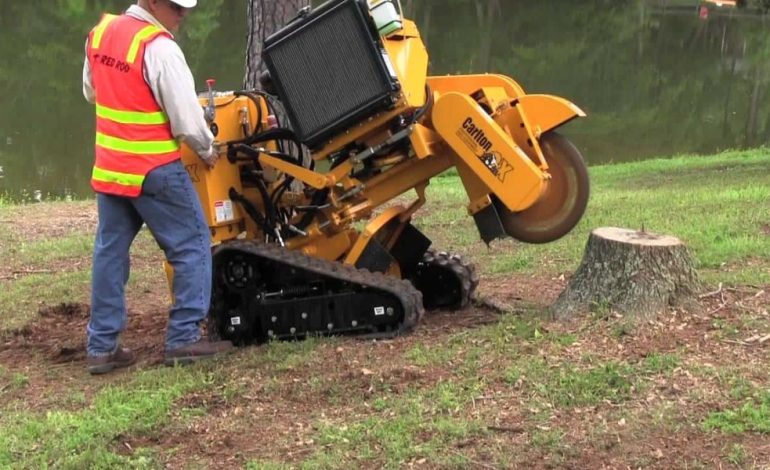
Stump grinding in established gardens requires equipment selection and approach planning that generic advice consistently underplays. Stumps adjacent to irrigation lines, retaining walls, or structural footings need grinding approaches that manage debris projection and ground vibration carefully. Compact grinder access through standard gate openings is a practical constraint that affects methodology significantly in established suburban properties. These are not minor logistics – they determine whether the surrounding garden emerges from the process intact.
Conclusion
The stump left after tree removal is not a passive remnant waiting to quietly disappear. It is an active source of pest risk, root regrowth, and spatial constraint that compounds with every season it remains in place. Stump grinding in Gold Coastproperties carried out promptly and correctly stops this process before it develops into something requiring considerably more intervention to resolve. The ground reclaimed is useful immediately. The problems prevented are real and specific. That is a straightforward case for acting sooner rather than later.